
The story of Verstegen
Nowadays Verstegen is world’s leading manufacturer of rope operated grabs with grabs operating in more than 115 countries worldwide.
The first years
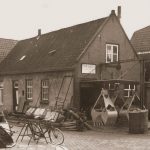
Verstegen started in 1951 when Jan Verstegen took over a small forge in the village Vreeswijk. At that time the work for a typical small blacksmith’s workshop consisted of small jobs, like cleaning stoves and placing steel rings on wooden wheels. It was hard work for little money. The bankruptcy of another forge in the village changed things. This other forge produced small buckets and single line grabs and Verstegen took over this business. When the first order was received for building a new bucket, Verstegen wanted to make a much better and stronger bucket than the previous one. The first Verstegen bucket was indeed very strong. but also much too heavy to work with. Verstegen learned the hard way that listening to his customers and thinking about the purpose of a bucket was extremely important for a good design. He built a new lighter bucket which proved to be very successful. Soon after he received more order for new buckets and the repair of existing buckets.
Already at a young age Gerrit Verstegen helped his father where he could, building buckets and grabs. When Jan Verstegen died at age 45, Gerrit (17 years old) decided to continue the small business.

The village vreeswijk
Verstegen was located in Vreeswijk, a small village located between the Rhine river and a large channel connecting the Rhine river to Amsterdam. Winning of sand on the Rhine river was extremely important for construction work and Because of its strategic position, Vreeswijk had the largest sand fleet of the Netherlands. Every day more than hundred small barges went on the Rhine river to dredge for the yellow gold. When the hard manual labor of winning sand was mechanized by small buckets and grabs the opportunities for Verstegen increased. Since 1970 the village Vreeswijk is part of the city Nieuwegein, where Verstegen is still located.
Growing
The first period Verstegen delivered bucket and grabs to local companies (skippers of mostly small barges). But when these barges travelled along the Dutch rivers and canals, other companies in the Netherlands also became interested. The Verstegen grabs were of a higher quality than existing grabs and people were excited about the higher productivity and reliability. Soon companies from the rest of the country started ordering grabs from Verstegen and the company had to grow.
When the demand for grabs increased, Gerrit Verstegen decided to stop all other work and fully focus on repairing and building grabs. Soon the forge becomes too small and after temporary hiring a small production facility, the first Verstegen production hall is built in 1964, followed by a second and third hall in in the early and middle of the seventies. In 1966, when the company becomes too big to manage alone, Gerrit asks Jacques Visser to join the company. Gerrit is responsible for sales, design and building the grabs. Jacques takes care of finances and personnel.
Bigger, stronger and further away
Until 1970 most grabs were mainly used for handling sand and gravel and sizes were still very small. Between 1965 and 1970 all Verstegen employees received a treat when a grab bigger than one cubic meter (1000 litres) was sold. At that time our grabs were sold to customers in the Netherlands, Belgium, France and Germany.
Developments in the market
During the seventies and eighties of last century important developments took place. Existing customers bought bigger cranes and Verstegen started to build bigger grabs and other companies who already owned higher capacity cranes, became interested in this “new manufacturer”. Within ten years the maximum grab size went from 5 to 20 cubic meters and crane loads from 10 to 30 ton. At that time Verstegen also started experimenting with special types of steel that were much stronger than the steel common used for building grabs, resulting in grabs with a lower dead weight and a higher capacity. More and more companies started working with our grabs and Verstegen grabs were exported to more than twenty countries in and outside Europe.
Scissors grabs
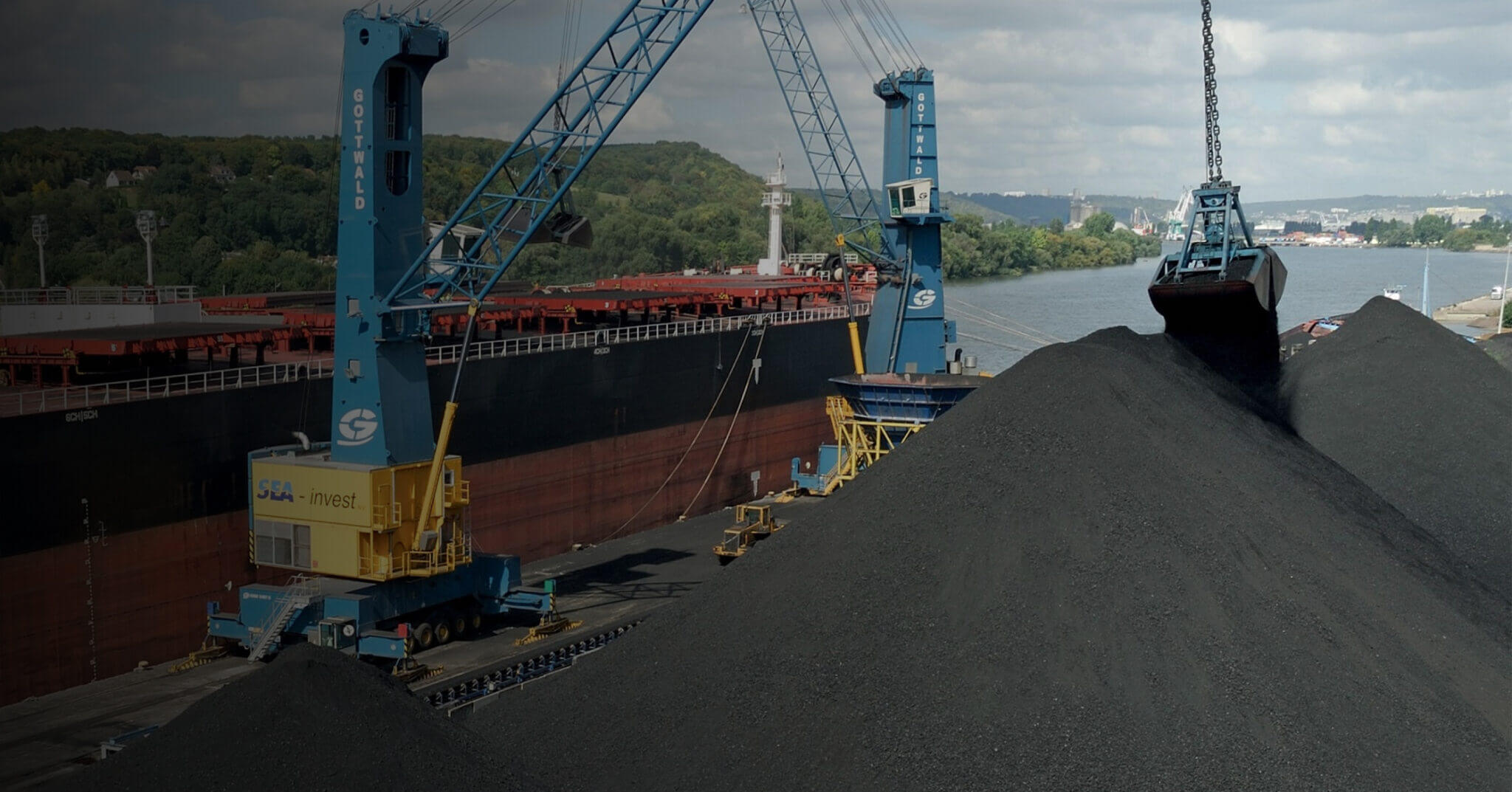
Scissors grabs were developed around 1965 in the Netherlands and at that time the grabs were superior to the common used clamshell grabs. At that time clamshell grabs were still extremely heavy and their weight was about 50% of the total crane capacity. Bulk materials often were not crushed and the heavy weight was needed for a good filling. Scissors grabs have a different way of working and could be build much lighter. The reduction in weight could be used to increase the grab volume which resulted in higher unloading rates.. During the seventies and early eighties many steel works changed from heavy clamshell grabs to the new scissors grabs.
Entering the “Champions League”
The Verstegen grabs were popular amongst stevedores, but because of the bigger available grab sizes, now also steel manufacturers became interested in the more productive Verstegen grabs. Because Verstegen still was a relative unknown player it took quite some effort to convince the first customers. In 1983 Verstegen delivered the first iron ore and grabs to Sidmar Steel works (nowadays Arcelor) in Belgium for their 32 ton cranes. The grabs were a great improvement in comparison to their existing grabs in terms of productivity. In 1984 also Antwerp Bulk Terminal started working with our grabs, followed by Sollac Solmer and Sollac Dunkerque in France. In the next years large UK companies Redcar Steelworks and Immingham Bulk Terminal changed over to Verstegen grabs and other companies outside Europe followed
Within 10 years more than fifteen major steel works changed completely to our grabs. Verstegen was now building ore and coal grabs for cranes with capacities between 25 and 63 ton with sizes above 40 cubic meter. We were suddenly in the grab manufacturers’ Champions League!
Replacing scissors grabs with our “light-weight” clamshell grabs
During the eighties and nineties Verstegen replaced many scissors grabs with their clamshell grabs. The Verstegen grabs were more 10 to 20% lighter and therefore more productive than any other grab. Because of the good design and special steel, they were also reliable and had a very good lifetime. Companies not only achieved higher unloading rates with our grabs, they also experienced lower operational costs. The lifetime of the closing ropes was for instance much longer than for the scissors grabs, resulting in lower costs and less downtime.
Crane manufacturers take us further
After the delivering our grabs to steel works in Belgium and France the French crane manufacturer Caillard contacted us. Between 1980 and 2000 Caillard was one of the leading manufacturers of large ship unloaders. The high capacity Verstegen grabs offered them a large competitive. Besides France, Caillard, nowadays part of Konecranes, introduced Verstegen grabs to companies in Australia, Guatemala, Egypt, Pakistan, Turkey and South Africa.
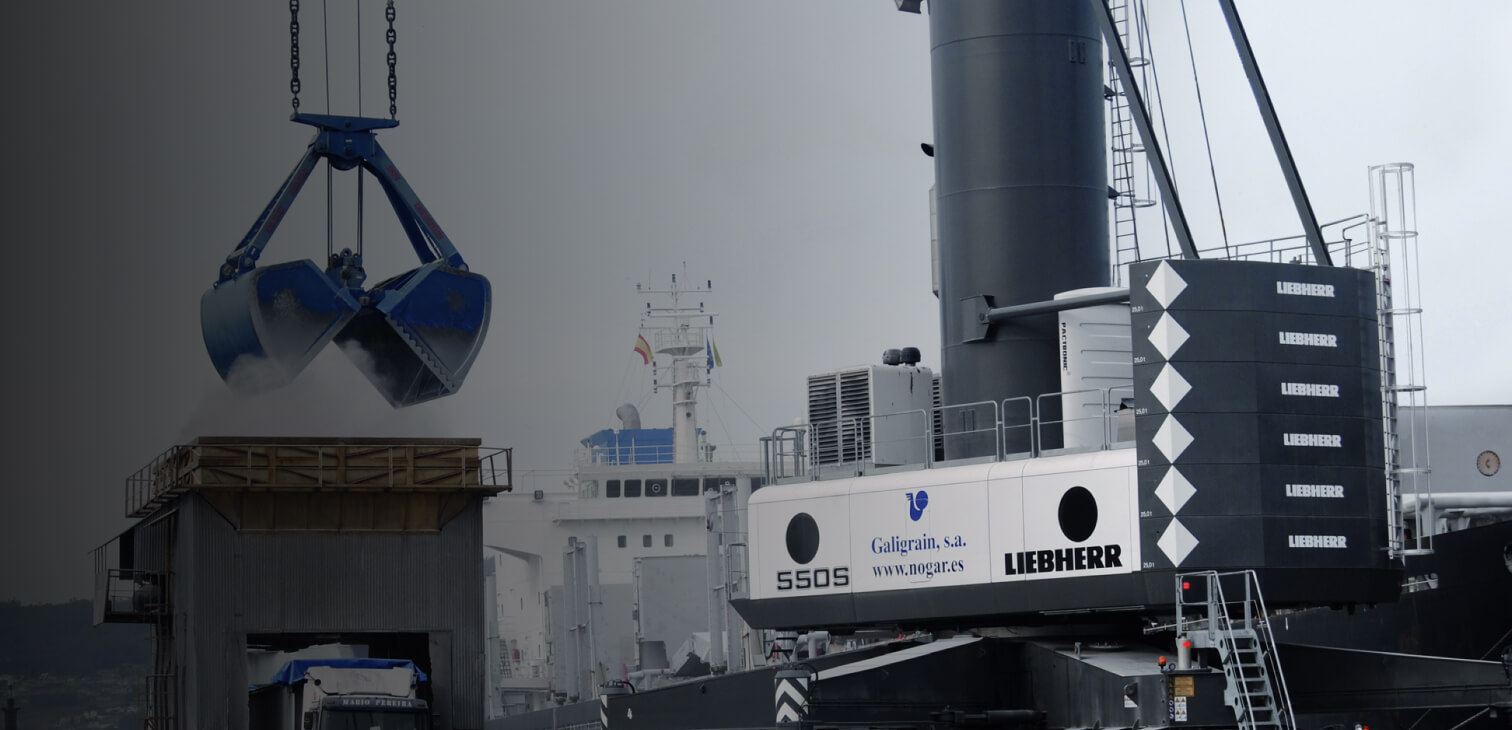
Besides Caillard also other crane manufacturers wanted to deliver our grabs together with their cranes. The Dutch crane manufacturers Figee and NDC opened markets in Asia with customers in India, Indonesia and China. Later on German crane manufacturers Ardelt, Liebherr and Konecranes Gottwald took us even further. Nowadays Verstegen grabs operate in 115 countries worldwide.
If you can make it there…
Dutch people are known for being very direct. They don’t like small talk or beating around the bush. What you see is what you get when it comes to the Dutch. So when a grab was not performing well, you’d better fix it. Dutch customers are also very demanding when it comes to productivity. Labor costs are relative high and therefore equipment must be reliable and efficient. Finally the Dutch don’t like to spend money, so prices must be kept on a reasonable level. So when people from the Netherlands are satisfied with your products, you can be confident that people from other countries are going to love them.
Change of ownership
In 1989 Gerrit Verstegen decides to retire and through a management buy-out Jacques Visser takes over the company. His son Eric Visser who just graduated from university joins him and will become responsible for sales. Gerrit stays for the first period to train and assist him. Eric wants to modernize the company and introduces computers to the office and engineering department. At the same time the attention to the production process and welding methods is increased. Father and son Visser work together until 1993 when Jacques decides to retire. In 1994 his youngest son, Peter also joins the company to take over sales from Eric, who is managing director now.
Verstegen wants to grow further. By advertising in international magazines and participating in exhibitions the name Verstegen becomes worldwide known. We also started thinking about a bigger and more modern production facility because the demand for bigger and bigger grabs kept growing.
Optimized grabs for different bulk materials
Like the size of our grabs, also the number of different bulk materials handled with our grabs increased over the years From building only grabs for sand and gravel, we developed to designing and building grabs for all kinds of bulk materials. And where many manufacturers delivered practically the same grab for different materials, Verstegen started to optimized their grabs for specific bulk materials and specific unloading situations.
Large and modern production facility
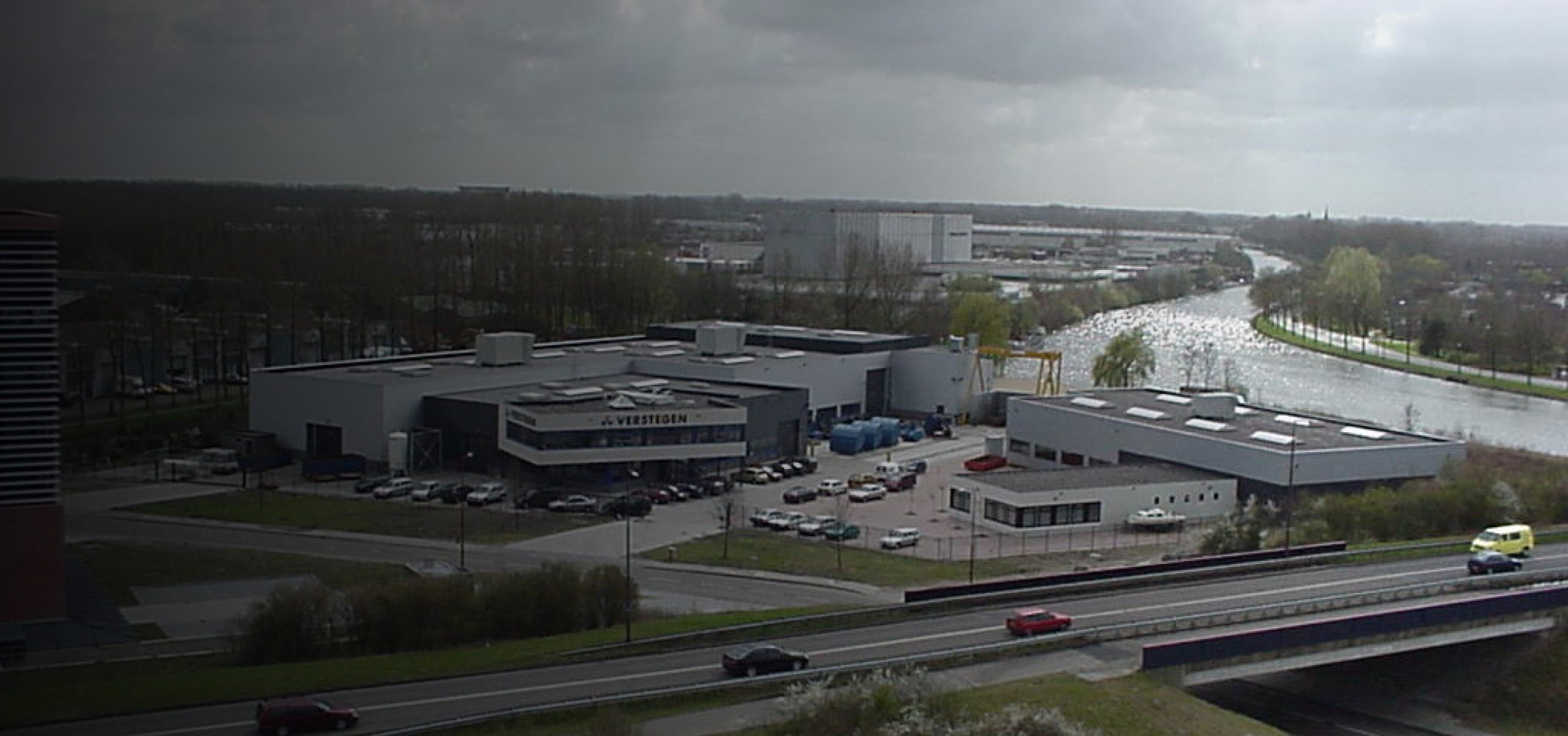
Since the required grab sizes grew dramatically, it was impossible to keep building them in the old factory. Besides the size and the insufficient capacity of the cranes, the internal logistics were a nightmare. The old factory, consisted of three interconnected production halls, where large machines that where not in a logical place couldn’t be moved.
The new factory, which is roughly five times bigger than in 2000, is designed around the building process of our grabs with a logical material flow
Optimizing and standardizing
Optimizing grabs for each individual project result in a wide variety of different grabs, which makes it impossible to build grabs to stock. The final engineering and production can only start after receipt of the official order and in combination with relative short delivery times this can put a lot of pressure on the design and production process.
To manage this in a good way Verstegen developed their own modular building system, where a grab is divided in different functions and components. We could let go of problems we experienced in the past and build further on the successful products. Our own experiences with repairing grabs and the feedback on thousands of grabs, received from hundreds of customers from all over the world, were a great help to know what works and what needed to be improved further.
The system makes it possible to standardize and optimize our parts and even complete modules. Nowadays the exact same hinge points, with identical bearings and pins, can be on a thirty cubic meter fertilizer grab as well as on a ten cubic meter iron ore grab or an eight cubic meter dredging grab. Reported problems about an individual part or complete module can be investigated in a simple way and compared with possible other reported cases. Improvements can be made to individual parts, without the need to adjust other elements of the design.
We never intended to be big
Of course we are proud of what we have achieved and other the other hand we believe It was a matter of being at the right time at the right place. The local circumstances at the beginning and the market situations later on gave us the opportunities to grow and develop further. Verstegen just acted upon this. Customers appreciated our products and kept coming back, while in the meantime new companies joined us. By doing the right things at the right time we have been successful which made it possible to develop and grow further.
Expanding and developing further
Over the years Verstegen has been recognized as the leading grab manufacturer with grabs delivered to companies in more than 115 countries worldwide.
We are proud to have major stevedoring companies and leading crane manufacturers as Liebherr and Konecranes Gottwald as loyal customers.
We continue with further improvements to our grabs and innovations, like the GrabSense. A revolutionary invention that brings your grab alive and allows you to access data through your desktop and smartphone.